

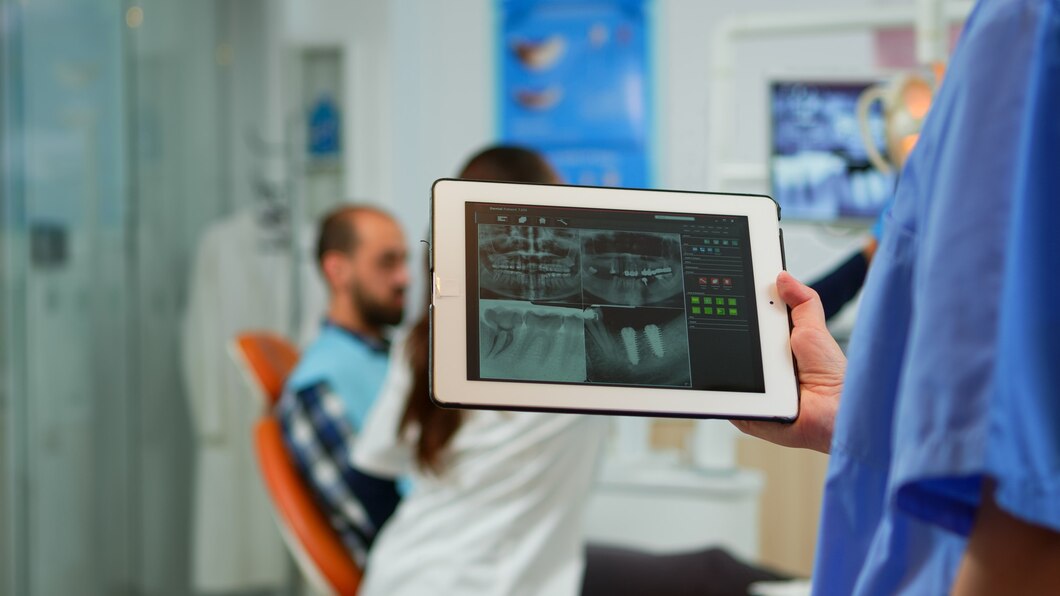
When you sit in the dental chair, the team often suggests taking images of your mouth to see what is happening beneath the surface. Finding reliable Dental Radiography (X-Rays) near you is a vital part of a complete check-up because your eyes can only see about a third of each tooth.
These pictures act like a roadmap for your oral health, showing the roots, the jawbone, and the spaces between teeth where cavities love to hide.
By using these tools, experts can find tiny problems and fix them before they turn into big, expensive headaches.
Why Seeing Under the Gums Is Important
A physical exam is great, but it cannot reveal what is happening inside the bone or under an old filling.
A dentist in Gainesville uses these images to check the health of the “foundation” of your smile. Just like a house needs a strong base, your teeth need healthy bone and solid roots to stay in place.
Without these pictures, many issues would remain invisible until they started causing severe pain or swelling.
- Finding Cavities: Spotting decay between teeth that a toothbrush can’t reach.
- Checking Roots: Looking for infections or cysts deep in the jaw.
- Bone Health: Measuring the height of the bone to check for gum disease.
- Old Work: Checking if old crowns or fillings have hidden leaks underneath.
How Technology Finds Hidden Growth Issues
For younger patients or those with wisdom teeth concerns, pictures are the only way to see how the teeth are moving.
By visiting a dentist near you for regular scans, you can track the progress of adult teeth before they even break through the gums. This helps in planning for braces or deciding if wisdom teeth need to be removed before they start pushing other teeth out of alignment.
- Tooth Alignment: Seeing if teeth are growing in straight or crooked.
- Impacted Teeth: Finding teeth that are stuck under the bone.
- Missing Teeth: Checking if all the adult teeth are present in a child’s jaw.
- Jaw Growth: Making sure the upper and lower jaws are lining up correctly.
The Different Types of Digital Images
Not every scan is the same. Depending on what the team needs to see, they might use different angles or machines to get the best view of your mouth.
| Scan Type | What It Shows | Why We Use It |
| Bitewing | Crowns of back teeth | To find cavities between teeth |
| Periapical | The whole tooth to the root | To check for abscesses or infections |
| Panoramic | The entire mouth in one shot | To see wisdom teeth and the jaw joint |
| Digital 3D | A 3D view of the mouth | For planning implants or surgery |
Ensuring Your Safety During the Process
Many people worry about radiation, but modern digital tools are incredibly safe and use very low levels of energy.
The amount of exposure you get from a full set of dental pictures is often less than the natural radiation you get from a short airplane flight.
The team also uses protective aprons to ensure that only the necessary areas are involved in the scan, making the process quick and worry-free.
- Digital Sensors: These are much faster and safer than the old film style.
- Lead Aprons: These protect your body while the images are taken.
- Speed: Digital pictures show up on a screen instantly for faster care.
- Precision: We only take the specific pictures needed for your health.
Detecting Bone Loss and Gum Disease
Gum disease is a silent problem because it often doesn’t hurt until it is very advanced. Scans allow the team to see if the bone supporting your teeth is starting to shrink away.
If bone loss is caught early, special cleanings can be done to stop the damage and save your teeth. This is one of the most important ways that radiography helps you keep your natural smile as you get older.
Identifying Cysts and Oral Tumors
While rare, it is possible for growths to develop inside the jawbone where no one would ever feel them. Regular images allow for a full screening of the jaw and facial structures.
Finding these issues early is key to successful treatment. Because these scans cover more than just the teeth, they act as a general health check for the lower half of your face.
Modern Tools for a Healthier Smile
At Smart Smile Dentistry, we use the latest technology to get a clear picture of your oral health. Seeing the whole story is the best way to give you the gentle and effective care you deserve.
Our goal is to find small problems before they become big ones, saving you time and keeping your smile strong.
If you are ready for a thorough check-up that looks beneath the surface, we are here to help.
Contact us today to book your visit and let us help you keep your smile bright and healthy!
Frequently Asked Questions
How often do I need to have these pictures taken?
It depends on your health! Most healthy adults only need them every year or two. If you have a lot of fillings or a history of gum disease, the team should take them more often to make sure everything stays stable.
Are these scans safe for pregnant women?
Yes, dental scans are safe during pregnancy, especially with the protective gear we use. However, we usually only take them if there is an emergency or a specific problem that needs to be fixed right away.
Do these images show oral cancer?
While they aren’t the main tool for cancer checks, they can show changes in the bone or strange growths that might need a closer look. They are a very helpful part of a full screening for your mouth and jaw.
Why do I need a full “panoramic” scan?
A panoramic picture shows your whole jaw, including the joints and sinuses. This is great for seeing how all your teeth fit together and checking for problems that a small, single-tooth picture might miss.